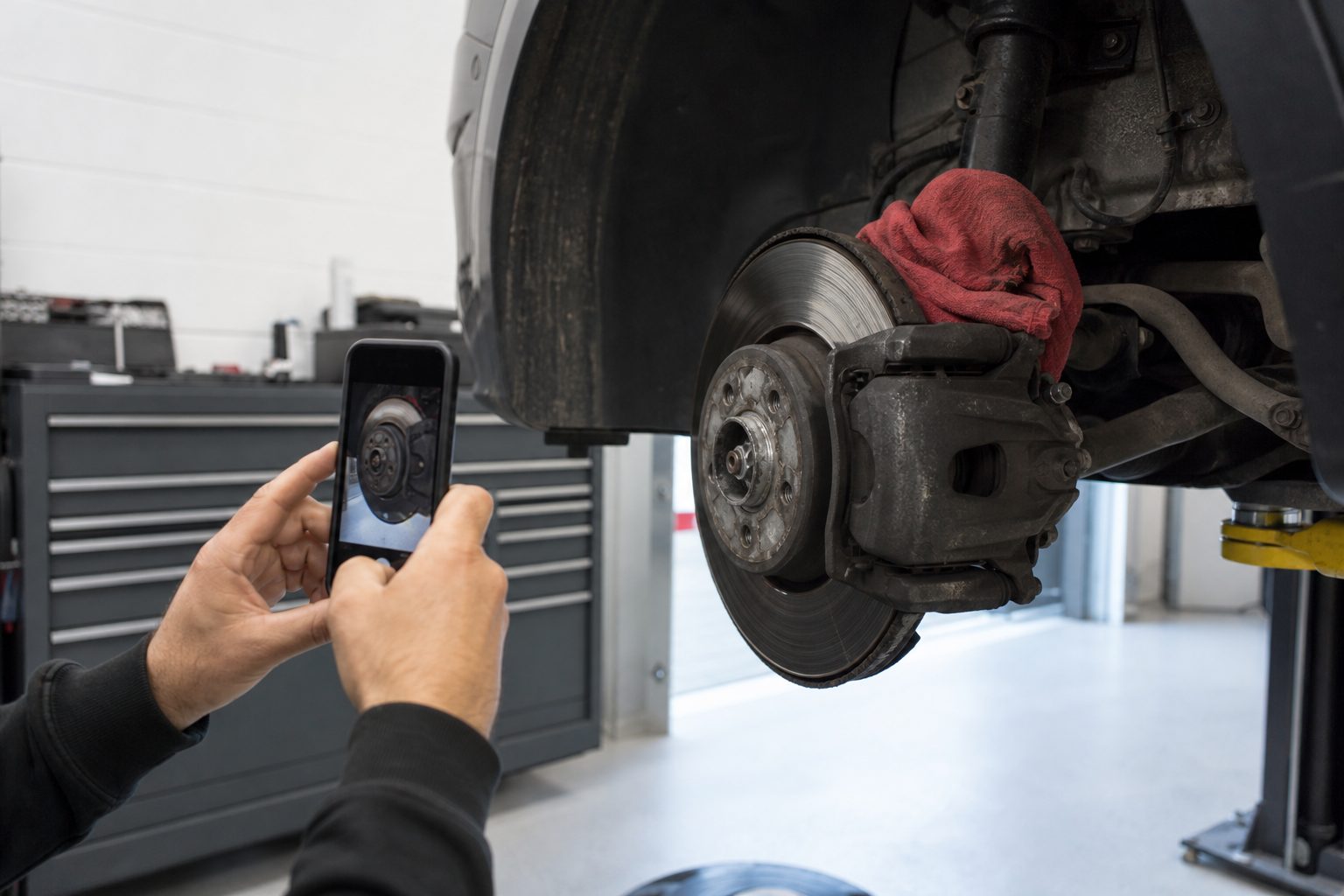
Show the worn pad on the customer's phone, then ask for the approval.
InspectBay turns the phone already in your technician's pocket into the inspection sheet: measured photo lines graded green, amber or red, sent as one link the customer opens from the waiting room or from their desk at work. The advisor stops leaving voicemails, the tech stops standing around, and the ticket moves while the car is still in the air.
The car is ready to work on. The approval is what you are waiting for.
A tech pulls a wheel, sees 3 mm of pad and a scored rotor, writes it on a carbon copy sheet and walks it to the front. Then the shop stops. The advisor calls a number that goes to voicemail, the bay sits, and by four o'clock somebody is deciding whether to just do the oil change and hand the keys back.
Voicemail eats the morning
We timed a four bay shop in Ohio for a week: 61 approval calls placed, customer reached on the first try 22 times. The rest turned into callbacks, text threads and one very long conversation about a serpentine belt.
47 minutes a day per advisor
Yellow work walks out the door
Nobody says no to a picture of a leaking strut. They say no to a voice on the phone listing four things in a row. Deferred work that never gets documented never gets sold, and it never gets followed up either.
$3,140 a month left in the lot
The paper sheet dies in the bay
Courtesy check sheets get oil on them, get stuffed under a floor mat, or get filled out at the end of the shift from memory. One shop owner found eleven of them in a toolbox drawer when we audited his process.
1 in 3 sheets never reaches the customer
Comebacks you cannot prove
Six weeks later the customer swears you never mentioned the CV boot. Without a time stamped photo the argument is a coin flip, and most shops eat it to protect the review score.
$690 average goodwill write off
From the toolbox to the yes
Four moves, and the approval is back before the tech finishes the tire rotation.
Nothing here asks a technician to learn software. The phone is already in his hand, the camera is already in the app, and every line takes one tap to grade.
1
Open the ticket at the toolbox
Scan the VIN off the door jamb or type the plate. Year, make, model and the shop's inspection template load in about two seconds, with last visit's measurements sitting next to the new ones.
2
Shoot it and grade it
Photograph the pad, the tread depth gauge, the weeping water pump. Tap green for good, amber for monitor, red for needs work now. Measurements go in the numeric field, and a voice note becomes a caption the customer can read.
3
The advisor prices it and sends one link
At the front counter the graded lines are already sorted red to green. Add labor and parts, drop the lines you would not sell today, and text the customer a single link. No app to download on their end.
4
They approve line by line, the bay gets dispatched
The customer zooms into the photo, taps approve on the brakes, taps decline on the cabin filter, and signs. Your dispatch board updates, the tech's phone buzzes, and the declined line is queued for a follow up in sixty days.
Built for the bay, not the boardroom
Everything a shop actually uses on a Tuesday.
Six pieces do the work. Each one exists because a shop owner told us the old way was costing him hours or hundreds of dollars.
Photo lines the customer can zoom
The camera lives inside the inspection line, so a picture of the inner pad is attached to the brake row and nothing else. Customers pinch to zoom on the scoring, which is the moment most of them stop arguing about the price.
Green, amber and red on every line
One grading scale runs the whole shop, so a customer who was here in March reads the same colors in September. The report opens with the red lines at the top and a plain sentence under each one saying what happens if it waits.
Measurements that carry forward
Pad thickness in millimeters, tread in 32nds, battery test results and brake fluid copper content each get a real number field. Next visit the app shows the old reading beside the new one, which turns a guess into a wear rate you can show.
One link, approved line by line
The customer gets a text with a single link and no login, no download and no PDF that will not open on an older phone. They approve the struts, decline the wipers, and sign with a finger, and every choice is stamped with a time and a device.
Declined work follows itself up
Every amber and red line the customer passed on lands in a follow up queue with the photo still attached. At thirty, sixty or ninety days the shop sends a short reminder with that exact picture, and the reply rate beats a cold call by a mile.
Writes back to your management system
Approved lines return to your repair order as clean text with the photo links attached, so nobody retypes an estimate at four in the afternoon. Shops on Tekmetric, Shop-Ware, Mitchell 1 and Protractor are connected today, and paper shops run InspectBay on its own.
What the needle moves to
Four numbers owners check after the first ninety days.
These are medians across 428 shops billing between 40 and 260 repair orders a month, measured against their own previous quarter rather than an industry average.
31%
Higher average repair order
Graded photos sell the work the phone call never got to. Shops keep the same labor rate and the same parts matrix, they just stop losing the second and third recommendation on a ticket.
11 min
Median time to approval
A text link gets opened at a desk, on a job site, in a school pickup line. The old average across the same shops was one hour and fifty two minutes, most of it spent waiting for a callback.
$4,880
Recovered declined work per month
The follow up queue is the quietest money in the shop. A sixty day reminder carrying the original photo of a cracked belt brings back roughly one in five customers who said not today.
94%
Inspection links opened
No login and no download is the whole trick. The link renders on a nine year old phone over a weak signal, and the advisor can see the moment it was opened before deciding whether to call.
From the front counter
Three owners, three states, same story about the phone.
Repair order 41-2208Fort Worth, TX
I stopped arguing about brake jobs in October. My tech shoots the inner pad at 2 mm, the customer sees the picture on his lunch break and texts back do it. We went from two callbacks a car to almost none, and my advisor got his mornings back.
Repair order 77-0914Spokane, WA
Writing an estimate used to mean reading a greasy sheet and hoping I understood the tech's handwriting. Now the red lines are already on my screen with the photos, and I price the ticket in about four minutes. Customers ask fewer questions because the answer is right there.
Repair order 15-6631Dayton, OH
The follow up queue paid for the software in the first eleven days. We sent sixty day reminders on declined struts and tie rods with the original pictures attached and booked nine of them. My flat rate guys stopped complaining about the app once they saw their hours.
428Independent shops running inspections every day
1.9MGraded inspection lines photographed since launch
68%Of red lines approved on the first link sent
GoodMonitorNeeds work now
Plans by shop, not by inspection
Pick the plan that matches your bay count.
Inspections, photos, videos and customer links are unlimited on every plan. You will never get a bigger invoice because you had a busy month.
Every plan is billed monthly in US dollars and can be cancelled at any time from the owner settings screen. No setup fee, no per inspection charge, no annual contract.
Straight answers
Questions shop owners ask on the first call.
Plans are priced per shop, not per inspection. One Bay is $49 per month for a single technician account with one advisor seat, Full Shop is $99 per month for up to eight technicians and three advisors, and Multi Shop is $219 per month for up to five locations under one owner group. Inspections, photos, videos and customer approval links are unlimited on every plan. Nothing is metered, so a busy October does not turn into a bigger invoice.
Most shops finish setup in a single afternoon. You pick an inspection template, rename the lines to match how your techs already talk, add your logo and your service advisors, and run two practice inspections on cars in the lot. We stay on the phone with your lead tech for the first real ticket so the photo habit sticks. By the next morning the crew is usually shooting inspections without being reminded.
Your shop owns them. InspectBay stores inspections, photos, measurements and approval history on your behalf, and an owner can export the whole history to CSV and original resolution image files at any time without asking us. We do not sell shop data, we do not share it with parts vendors, and we do not use your customer list for advertising. If you cancel, your export stays available for ninety days.
InspectBay pushes the approved lines back as a clean text summary with the photo links attached, so your advisor is not retyping the estimate. We connect through an API or a copy ready block, depending on what your management system supports, and the team will walk your setup on the demo call. Shops running Tekmetric, Shop-Ware, Mitchell 1 and Protractor are live on it today. If you keep your repair orders on paper, InspectBay still works fine on its own.
Every plan is month to month and you can cancel from the owner settings screen without calling anyone. Billing stops at the end of the current month and there is no termination fee or minimum term. Your inspection archive stays downloadable for ninety days after the last billing date, which is more than enough time to pull the photos on any ticket a customer might dispute. Come back later and we can restore the same shop account.
That objection is the reason the app looks the way it does. A full multi point inspection is a swipe down a single screen with three big grade buttons per line, and the camera opens inside the line instead of sending the tech to the phone gallery. Techs report a finished inspection in four to seven minutes, and because graded yellow lines turn into approved hours, flat rate techs see the payoff on their own numbers inside two weeks. The shops with the highest adoption pay a small spiff on approved deferred work for the first month.
Bay Notes
The magazine for shops that photograph the wear
Inspection technique, parts decisions, estimate law and shop math, written from the lift and the front counter rather than from a marketing desk.
Where to stand, what to hold next to the pad, and how to caption each shot so a customer looking at a phone screen at work sees the wear, the tread depth and the leak for what they are.
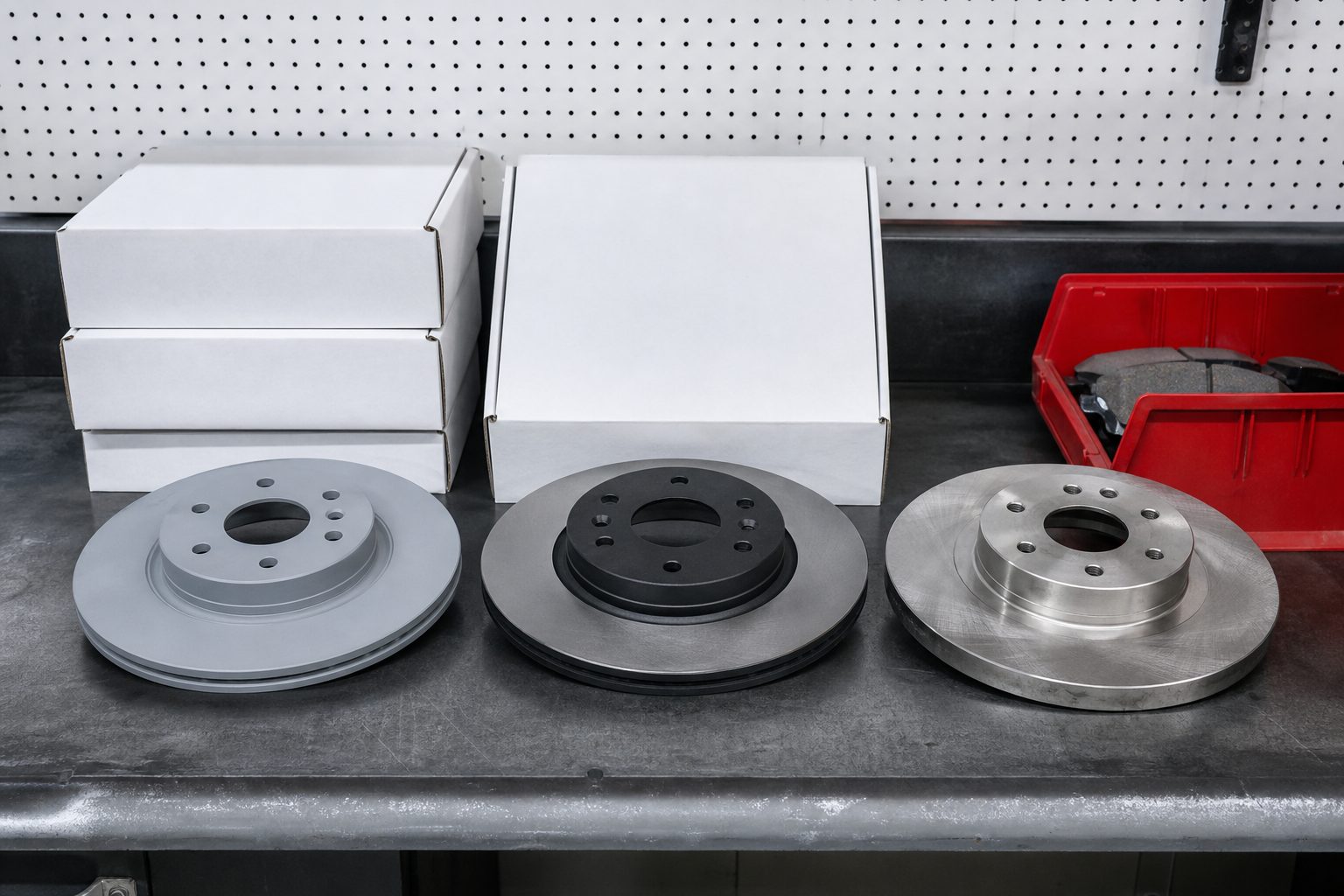
The three part categories a service advisor quotes every day, what each one means for warranty coverage, delivery time and comeback risk, and how to explain the price gap at the counter.
Work a customer turns down is not lost, it is unscheduled. Here are six habits that let those line items vanish between the estimate and the next oil change, and what to do instead.
Bring one repair order to the call and we will inspect it together.
Tell us how many bays you run and which management system sits on the counter. We will set up a demo shop with your inspection template already loaded, then walk your lead tech through a real vehicle on your lift, not a slide deck.
A 25 minute call, run by someone who has worked a service counter.
Your own inspection template built before we hang up.
A written estimate of the deferred work sitting in your history.
We reply within one business day, usually the same morning. Prefer email? Write to jimenezjulien42@gmail.com and mention your bay count.
JJ
InspectBay is designed and maintained by Jimenez Julien, who works directly with independent shop owners and service advisors on how the inspection reaches the customer. Read about the standards behind the product on the author page.