What OE, OES, Aftermarket and Remanufactured Each Mean
If you spend your days at the service counter, you field questions about "OEM," "aftermarket," and "reman" parts almost as often as you quote labor hours. But these labels get thrown around by everyone from parts vendors to customers, sometimes without much detail. The differences matter: for warranty, for fit, and for customer expectations.
OE, or Original Equipment, means the part is made by the same company that supplied it to the vehicle factory. These carry the automaker's branding and typically come in the branded box. OES, or Original Equipment Supplier, means the part is made by the same manufacturer that made the factory part, but packaged under the supplier's own brand. For example, a Bosch OES alternator may be the exact part as the OE, minus the automaker's logo and box.
Aftermarket parts are built by companies not under contract to the automaker for that specific part. Their designs may copy the original, or they may introduce changes. Quality can range from excellent to barely passable. Remanufactured parts are used units rebuilt to a specified standard. A reman alternator, for example, has new brushes, bearings, and sometimes a new regulator, but the case and main components are reused.
Each category has its place in a repair shop's parts room. Some vehicles are best served with OE or OES, especially for fit or critical systems. Other times, a well-chosen aftermarket or reman part saves cost and delivers reliable service.
Keep reading: Six Ways Shops Lose Declined Work Before the Next Visit
Warranty Terms: Who Covers the Part and Who Covers the Labor
Warranty coverage is one of the first questions a customer asks when there's a comeback. The fine print changes depending on what you install and where it comes from. With OE parts from a dealership, the part warranty is usually honored at any authorized dealer. Labor coverage is less consistent. In most cases, unless you are a franchise dealer, only the part is covered, not your time. Some OE programs offer labor reimbursement, but this is rare for independents.
OES parts often come with a warranty from the supplier, and coverage may be honored nationwide through the supplier's distribution network. Labor coverage is again the exception, not the rule, unless you are part of a specific installer program. Length of warranty can vary: some OES brands offer two years or more, while basic coverage is often one year.
Aftermarket warranties are all over the map. Some economy brands provide just months of protection, while premium lines offer several years. There are also programs where the shop can enroll to get labor claims paid after an approved failure. However, this usually requires registration and paperwork at the time of sale. Many customers assume the part and labor are always covered, so it's best to explain the details at the counter.
Remanufactured parts typically come with a warranty from the rebuilder. The length can be similar to new aftermarket parts, but exclusions are common: improper installation, abuse, or contamination often void coverage. Labor reimbursement is rare unless purchased as an add-on or if you are part of the remanufacturer's network.
Availability and Delivery Windows When the Car Is on the Lift
Downtime is money lost for both you and the customer. Where a part comes from makes a big difference in how long a vehicle occupies a bay.
OE parts are often available next day from the dealership, sometimes same day if the warehouse is local. Rare or slow-moving items may require special order, which can take days or even a week. OES parts get to you through auto parts distributors, which often maintain local warehouses. These can arrive as quickly as any aftermarket part if stocked, but special orders can introduce delays.
Aftermarket parts have the edge for most high-turn items. Major brands are stocked by multiple jobbers in most markets, with several deliveries per day. Niche or uncommon items may need to be shipped in. Some aftermarket lines are only available through specific regional networks, so the number of daily runs matters.
Remanufactured parts are usually distributed through the same channels as aftermarket parts. If the unit is in stock, delivery is quick. If a specialty unit has to be sent out for rebuilding, turnaround can take days. There is also the extra step of handling and returning the core, which can slow things down if not managed efficiently.
A service writer's estimate should always take into account the real-world ETA, not just what the catalog says. Customers appreciate knowing whether their car will be ready today, tomorrow, or next Monday.
Keep reading: What State Law Requires on Written Estimates and Authorization
Where Aftermarket Quality Splits: Friction, Sensors and Plastics
Not all aftermarket parts are built the same. Some categories see more variation in quality than others. Knowing where the biggest splits occur can save you comebacks and protect your shop's reputation.
Friction Parts: Pads and Rotors
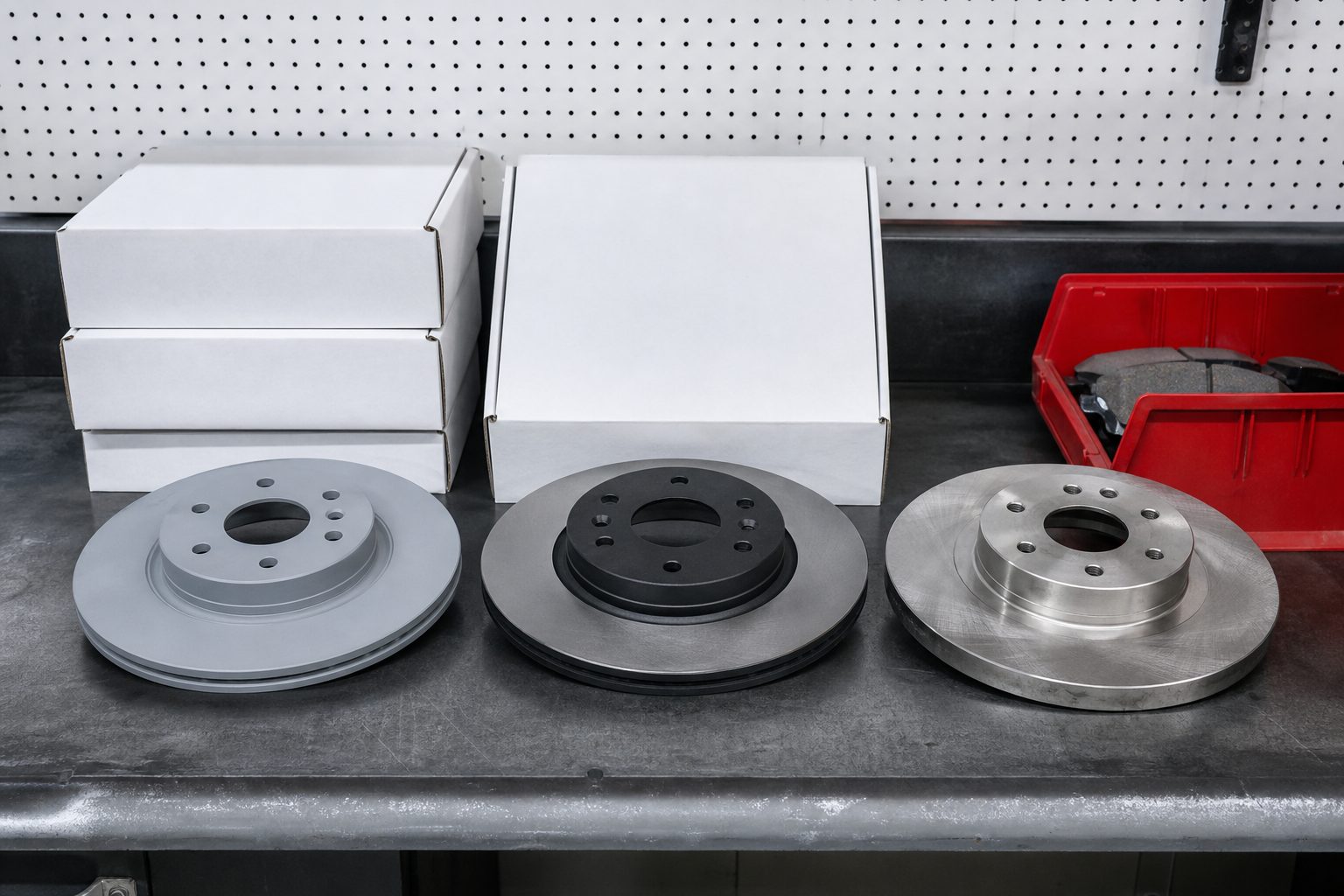
Brake pads and rotors are available in a wide range of compounds and builds. Some lines match or exceed OE performance, but others cut corners with lower-quality friction material or thinner castings. Cheaper pads may be noisy, dust heavily, or wear out quickly. Rotors that are too thin or poorly machined can warp and cause pulsation complaints. Many shops stick to trusted brands, even if the catalog offers several lower-cost options.
Sensors and Electronics
Modern vehicles rely on dozens of sensors: oxygen, ABS, wheel speed, and more. Aftermarket versions can be hit or miss. While some suppliers provide parts that work as well as the original, others may have issues with fit, connector quality, or signal accuracy. A no-start or warning light comeback because of a cheap sensor can wipe out any savings. For critical electronics, many shops prefer OE or OES unless a top-tier aftermarket brand is available.
Plastic Components: Cooling and Intake
Thermostat housings, radiator tanks, and intake manifolds made from plastic are common sources of leaks. Some aftermarket versions use inferior plastics or moldings that do not match the OE for heat resistance or fit. A poorly made housing can crack during installation or after just a few heat cycles. Careful parts selection pays off here, especially for repeat-failure items.
Cores, Core Charges and What Happens to the Old Unit
Remanufactured starters, alternators, calipers, and steering racks all involve core charges. The core is the used part you remove, which goes back to the remanufacturer for rebuilding. The core charge is added to your purchase price, then credited when you return the old unit in acceptable condition.
Core charges can range from a few dollars for a small caliper to several hundred for a diesel injection pump. If the core is damaged beyond repair or missing major components, the credit may be denied. It's important to inspect cores before sending them back, and to train technicians not to destroy housings during removal.
Some reman programs require the core to be returned in the original box, with all shipping paperwork included. Late core returns can mean lost credits or additional fees. Shops should have a system for tracking cores, especially when multiple jobs are in progress. Inventory management matters, because lost or rejected cores hit the bottom line directly.
For the customer, be sure to explain why a core charge appears on the estimate and that it is usually removed from the final bill once the old unit is returned. Transparency here avoids confusion and complaints at checkout.
See how InspectBay handles this for automotive repair
Pricing All Three Without Turning the Estimate Into a Menu
When you build an estimate, there is a fine line between offering choices and overwhelming the customer. Too many options turn the conversation into a negotiation rather than a recommendation. Most customers want a clear answer: what will fix my car and why should I trust it?
Many shops price the job based on the part they recommend, using OE or top-tier aftermarket for critical repairs, and offering alternatives only when cost is a major factor. For example, you might quote the job with a quality reman alternator and explain that a new OE unit is available at a higher price. Avoid listing every part option unless the customer asks. If you present three or more prices, be ready to explain the differences in warranty, fit, and expected life.
For fleet accounts or repeat customers who know the tradeoffs, offering a choice between OE, aftermarket, and reman is appreciated. For most retail customers, however, a confident recommendation based on your shop's experience prevents confusion. Document your part choice in the repair order, and make sure your team is on the same page about which brands and categories you trust.
Some shops use a digital inspection tool to document the part category on the inspection report. This keeps everyone, from tech to advisor to customer, aligned on what to expect before the job is sold.
Explaining the Price Gap Without Running Down a Brand
One of the hardest conversations at the counter is justifying why a part costs twice as much as what the customer found online. It is easy to fall into the trap of blaming "cheap parts," but that can make your shop sound defensive or dismissive of the customer's research.
The best approach is to focus on fit, warranty, and peace of mind. Explain that OE and trusted aftermarket brands are tested for compatibility with the vehicle's systems. Mention that warranties are handled by the shop, so the customer is not left dealing with returns or disputes if there is a problem. If a reman unit is used, point out the inspection and testing process, as well as the importance of a solid core for rebuild quality.
Let the customer know that your recommendation is based on your experience with what works on their make and model. If they want to discuss other options, walk them through the pros and cons without criticizing any particular brand. This builds trust and increases the chance of approval on the first quote.
Digital inspection systems can help here. When you show a photo of the failed part and include the recommended replacement type, it makes the conversation more transparent. Customers see exactly what is being replaced, and they have a record of the part category chosen. This supports your recommendation and reduces second-guessing at pickup.
In a world where parts options multiply every year, clear documentation and visual evidence matter. Tools that combine inspection photos, severity grading, and a one-link approval process can help shops communicate part choices more effectively and close the loop with customers who expect transparency at every step.