Written Estimate Rules and the Dollar Thresholds That Trigger Them
State laws set clear boundaries for when a written estimate is required. Most states mandate a written estimate before starting repairs if the expected cost passes a set dollar amount. This threshold can range from about fifty dollars to a few hundred, depending on the state. The goal is to prevent surprise bills and give the customer a chance to approve or reject the work before it starts.
Shops do not always need to provide a written estimate for every service. For example, in some states, only repairs above a certain cost require documentation, while diagnostics or inspections below that level may not. Some states allow customers to waive their right to a written estimate, but the waiver must be voluntary and, in most cases, written and signed.
Even where the law does not demand a written estimate for minor work, many operators choose to provide one as standard business practice. It builds trust and reduces disputes. State automotive repair boards tend to side with the customer if there is a complaint and the required paperwork is missing or incomplete.
Keep reading: Anatomy of a Brake and Tire Ticket, From Drop Off to Pickup
What Has to Appear on the Estimate Itself
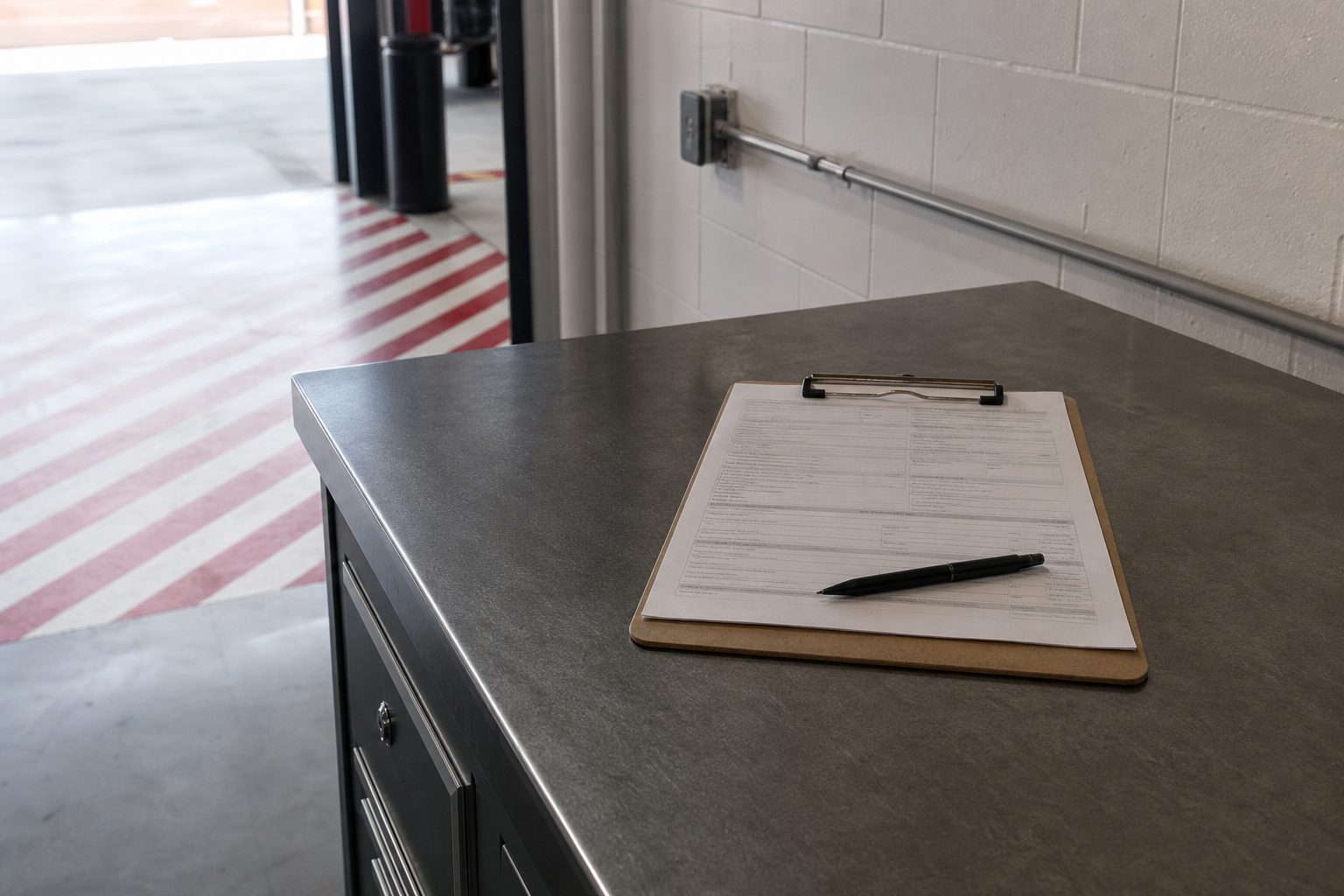
Most states require a repair estimate to include more than just a total price. The document should list the specific parts and labor needed, the estimated prices for each, and a clear description of the work to be performed. In most cases, the estimate must also include the shop's business name, address, and license number if applicable.
The estimate should explain that the final bill may be higher if additional repairs are authorized. Some states require a disclosure about the customer's right to approve further work. Others require an estimated completion date or time. The estimate must be signed by the customer or their authorized representative, unless the estimate is sent and approved electronically.
Shops should avoid vague language. "Repair brakes" or "check engine" is not enough. The estimate should specify "replace front brake pads and resurface rotors" or another clear task. This helps protect the shop if a customer disputes the bill later.
Authorization to Exceed the Estimate, in Writing and by Phone
When repairs will cost more than the original estimate, the shop must get the customer's approval before going ahead. This rule is strict in many states, and exceeding the estimate without consent can lead to penalties, chargebacks, or loss of registration. The required form of approval varies: some states allow oral consent, while others require a new written authorization or a signed addendum.
If the customer is not present, states often allow shops to get approval by phone, email, or text. The law usually requires the shop to record the date, time, and method of the approval, and who gave it. If the customer cannot be reached, many states require the shop to stop work until authorization is obtained. Some states let the customer waive the right to approve additional charges, but the waiver must be clear and documented.
What matters is that shops document how and when they received the customer's go-ahead. Relying on memory or a quick note on a work order is risky if there is a dispute or audit.
Keep reading: ADAS Calibration and EV Service: What Independent Shops Face Next
Documenting Oral Approval: Date, Time, Name and Method
When a customer gives permission by phone or in person, proper documentation is critical. Most states require the shop to note the date and time of the approval, the name of the person giving consent, and the method by which it was received (phone, in person, text, or email). This information should be entered on the work order, the estimate, or in the customer file.
Best practice is to include a short summary of the conversation. For example: "5/4/24, 2:15pm: John Smith approved additional $120 for coolant flush by phone." Some shop management systems prompt for this detail and store it with the repair order history. If a customer later claims they did not approve an extra charge, clear documentation can be the difference between a resolved dispute and a regulatory headache.
Many disputes come down to what was said and when. Written notes, especially if time-stamped, carry the most weight with regulators and courts. Forgetting to record even one approval can undermine the entire repair file in an investigation.
The Customer's Right to Inspect or Keep Replaced Parts
Most states require shops to offer customers the option to inspect or take possession of replaced parts, except for parts returned under warranty or those that must be sent to a remanufacturer. This right must be stated on the estimate or in a separate disclosure, usually with a checkbox for the customer to indicate their choice. The law is meant to deter unnecessary repairs and allow customers to confirm that work was performed as billed.
If the customer wants their old parts, the shop must return them at the time of vehicle pickup. If the shop needs to keep a part under warranty, they should note this on the estimate and explain it to the customer. Failing to offer or return parts as required can result in complaints and sanctions from state regulators.
Shops should have a routine for holding and disposing of old parts: tag them, store them in a designated area, and release them only to the rightful customer or as required by warranty procedure. This process protects both the shop and the customer.
See how InspectBay handles this for automotive repair
Invoice Requirements and Which Charges Must Be Itemized
The invoice, or final bill, must match the work actually performed and break out charges in detail. Most states require the invoice to list all parts supplied, their prices, the labor performed, labor hours or rates, shop supplies or miscellaneous fees, and taxes. The invoice should identify the vehicle by VIN or license plate and include the shop's business details.
Each part should be identified by description and, if possible, part number. Labor must be separated from parts, with either flat rate or actual hours shown. States often require a statement that the customer can inspect replaced parts if they have not already done so. If additional work was performed beyond the original estimate, the invoice should clearly note the extra charges and reference the date of customer approval.
Some states require the invoice to disclose whether parts are new, used, rebuilt, or reconditioned. The invoice must be provided to the customer at the end of the transaction, and a copy kept in the shop's records.
Registration, Posted Notices and How Long to Keep Records
Shops must comply with business registration rules and post certain notices where customers can see them. Most states require repair shops to register with the state or local automotive repair board. The registration certificate or license must be displayed in the waiting area or at the service counter. Some states require an additional sign describing the customer's rights to a written estimate, approval of extra work, and the right to inspect parts.
Shops must keep copies of estimates, work orders, invoices, and approval records for a set period, often from two to five years. Electronic records are acceptable in many states as long as they are complete and accessible for inspection. Failure to keep records as required can lead to fines, license suspension, or difficulty defending against customer complaints. Properly stored records also help with warranty claims and audits.
State inspectors may visit unannounced to review paperwork and verify compliance. Shops should train staff to know what documents to provide and how to explain the approval and estimate process if questioned.
Where the Rules Differ: California, Florida, New York and Massachusetts
Some states have extra requirements or unique procedures that go beyond the national norm. California, for instance, enforces some of the strictest rules: written estimates are required for all repairs over a low threshold, and the customer must sign to authorize each additional amount. Shops must itemize every part and labor operation, and provide specific written disclosures about the customer's rights. Oral authorization must be logged with date, time, and the person giving approval.
Florida requires written estimates for repairs over a set amount, but allows customers to waive the estimate in writing. If repairs exceed the estimate by ten percent or more, the shop must get approval before proceeding. Florida also mandates that the shop return replaced parts if requested in advance, unless they are under warranty. All work orders and invoices must be kept for at least twelve months.
New York has its own written estimate laws, requiring a signed estimate if the customer brings the car in, or detailed notes for estimates provided by phone. The shop must document all authorizations and keep them for at least three years. New York requires a disclosure on the invoice about the customer's right to replacement parts and the name of the technician who performed the work.
Massachusetts requires written estimates if the work will exceed a modest threshold. Shops must get separate written consent to go over the estimate. Parts and labor must be itemized on the final invoice, and records must be retained for at least two years. The state also requires shops to post a sign explaining the customer's rights regarding estimates and replaced parts.
Staying compliant in these states means paying close attention to paperwork, disclosures, and the timing of authorizations. Failing to follow one step can result in significant penalties, especially during consumer complaints or state audits.
Shops in every state benefit from systems that track estimates, approvals, and required notices in a way that is easy to retrieve and hard to lose. Tools that combine digital inspections, technician photos, automated severity grading, and one-link customer approval help operators keep records accurate and accessible, reducing compliance risk and paperwork headaches.