Why a Windshield Replacement Now Ends With a Calibration
Replacing a windshield used to mean a new piece of glass, urethane, and a careful install to prevent leaks. Now, it often means recalibrating the advanced driver-assistance system (ADAS) camera mounted behind the glass. On many modern vehicles, that camera is responsible for lane keeping, adaptive cruise, and automatic emergency braking. Changing the windshield changes the angle or position of the camera. If the camera is off by even a small amount, the system may misjudge lane markings or stop signs.
Most manufacturers require a calibration after any work that could affect a sensor's orientation. That includes windshield replacements, front-end collisions, or even some suspension repairs. Skipping the calibration can expose a shop to liability if a customer's safety system fails to perform correctly. Documentation of the calibration, including before and after results, is becoming standard procedure.
Insurance carriers and fleet managers now expect a record showing that ADAS features are functioning as designed before returning a vehicle to service. This standard is not limited to luxury brands. Compact and mid-level models now come with standard ADAS packages, making calibration part of routine repair work, not an exception.
Keep reading: A Multi Point Inspection Checklist You Can Finish in 15 Minutes
Static and Dynamic Calibration, and What Each Procedure Needs
ADAS calibration comes in two primary forms: static and dynamic. Each serves the same goal, ensuring the sensors "see" accurately, but uses a different method and set of requirements.
Static Calibration: Targets in the Bay
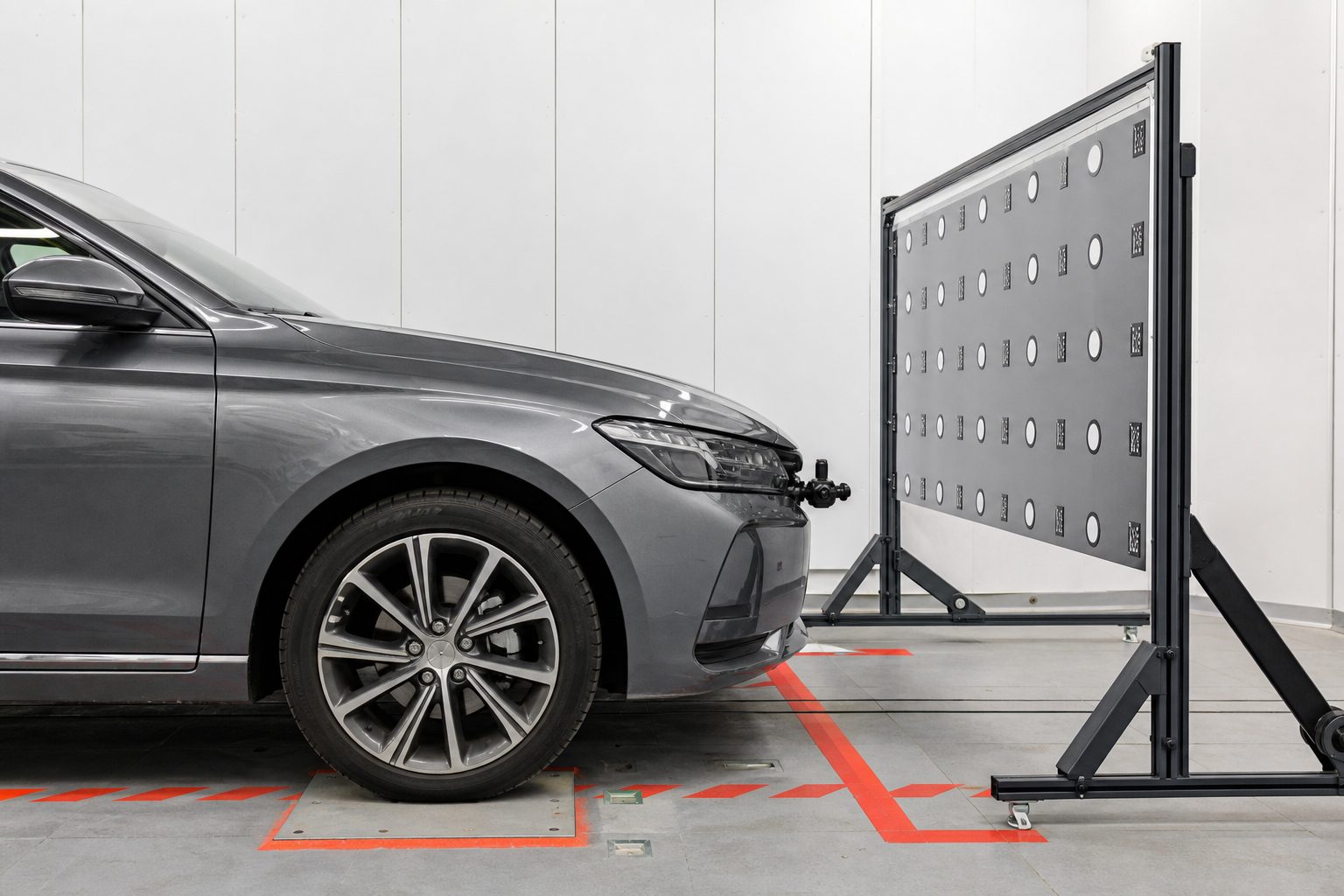
Static calibration is performed in the shop, with the vehicle parked. Technicians set up specialized targets or reflectors at precise distances from the vehicle. The process relies on a flat, level shop floor, controlled lighting, and enough space to position targets several feet in front of and alongside the car. This type of calibration is common for front-facing cameras, radar sensors in bumpers, and some 360-degree surround systems.
Shops must measure distances carefully and use laser tools or string lines to ensure accuracy. Even minor errors in target placement can result in miscalibration. The whole process can take up to an hour, depending on the sensor and the manufacturer's procedure.
Dynamic Calibration: On the Road
Dynamic calibration requires driving the vehicle on public roads at specified speeds, often with clear lane markings and minimal traffic. The ADAS system "learns" its environment as the car moves. Some calibrations require both: a static setup in the shop followed by a dynamic drive. Weather, traffic, and local road conditions can add unpredictability and delay. Technicians must follow manufacturer-specific instructions, which often call for certain speeds, durations, and even sunlight conditions.
Both methods demand trained techs and dedicated time. Unlike a scan-and-clear, calibration is not a background task, it ties up a bay and a technician until complete.
Floor Space, Level Ground and Lighting as Real Equipment Costs
The physical requirements for calibration are not trivial. For static calibration, a perfectly level floor is essential. Uneven concrete, drains, or slopes can throw off target alignment, making the result unreliable. Many shops find that their alignment bay is the only spot that meets the requirements, which creates bottlenecks if both services are needed at once.
Space is another limiting factor. Some targets must be placed 10 feet or more from the front of the vehicle, and there must be clear access around the car. Shops with narrow service lanes or crowded floorplans may need to clear out equipment or vehicles for each calibration, which disrupts workflow.
Lighting matters as well. Bright, even lighting prevents glare and shadow, which can confuse both cameras and radar sensors. Overhead doors, windows, and fluorescent bulbs all create variables that shops have to manage. Some switch to LED or add blackout curtains to stabilize conditions.
When deciding whether to bring calibration in house, owners must weigh the cost of rearranging the shop floor and upgrading lighting against the convenience and control they gain. For many, these infrastructure changes are as significant as the price of the calibration tools themselves.
Keep reading: How to Calculate Effective Labor Rate, ARO, and Tech Efficiency
Alignment and Ride Height as Prerequisites, Not Add Ons
Correct sensor calibration depends on the vehicle's wheels and suspension being within specification. If the ride height is off due to worn springs or the alignment is out, the sensor's field of view is affected. Manufacturers often require that alignment and ride height be checked and corrected before performing ADAS calibration.
Shops have to adjust their workflow. What would have been a quick windshield swap now might require a four-wheel alignment and a ride height check, especially if the customer has replaced tires or the vehicle has seen curb strikes. This adds time to the job and raises the question of who pays for additional work when the customer came in for only a windshield.
These prerequisites also increase the risk that a missed step will come back to haunt the shop later. Skipping a ride height check or not documenting an alignment can provide grounds for disputes if the customer later experiences ADAS faults. Thorough documentation is critical.
Sublet or In House: How Shops Are Weighing the Decision
Given the cost and complexity, many independent shops face a choice: bring calibration in house, or sublet to a specialist. Both options come with tradeoffs.
Subletting: Lower Investment, Less Control
Subletting means sending the vehicle to a glass or calibration specialist. This avoids the up-front expense of equipment and training. It also shifts the liability for the calibration to the sublet provider. However, it adds delay and coordination. The shop loses a measure of quality control and may have to arrange transport, wait for scheduling, and update the customer on progress. Missed or delayed calibrations can keep a bay tied up or stretch out the repair timeline.
In House: Higher Barriers, More Margin
Bringing calibration in house means investing in targets, scan tools, and floor upgrades, plus staff training. The payoff is speed and control. The shop can complete repairs start to finish under its own roof and capture the revenue that would have gone to the sublet provider. However, the learning curve is real, and mistakes can be costly. Liability sits squarely with the shop.
Some shops start with subletting and move to in house as volume builds or as customers demand shorter wait times. Others stick with subletting, especially in markets where specialists are reliable and close by. The choice often depends on shop size, floor plan, and local competition.
See how InspectBay handles this for automotive repair
High Voltage Training, Insulated Tools and Battery Handling
Servicing electric vehicles (EVs) brings a new set of challenges, starting with high voltage safety. EV battery packs can carry hundreds of volts. Even a simple repair like an AC compressor swap can require disconnecting and isolating the battery. Without proper training and insulated tools, technicians risk serious injury or worse.
Shops must decide who gets trained and whether to certify the whole team or just a few specialists. Training covers not just battery disconnect but also safe handling of orange cables, use of personal protective equipment, and emergency procedures in case of a short or arc. Some automakers require proof of training before allowing access to repair procedures or battery shipping.
Insulated sockets, gloves, and mats are now part of the tool budget. Shops also need a plan for storing battery packs that are removed for service or replacement. Fire risk requires designated battery quarantine areas, often outdoors or in a ventilated space. Most local fire codes now address EV battery storage, and shops must keep up with changing requirements.
High voltage work brings new forms of paperwork too. More shops are logging who performed battery disconnects, using checklists to verify isolation, and saving records for insurance. These steps add time, but they are now part of the standard of care.
EV Work That Still Lands in Independent Bays: Tires, Brakes, Cabin Filters, 12 Volt
While high voltage work can be daunting, many EV services are familiar territory for independent shops. Tires and brakes wear out just as they do on gasoline vehicles, sometimes faster, due to vehicle weight and instant torque. Regenerative braking changes pad and rotor wear patterns, but the basic service tools and skills still apply.
Cabin filters, wiper blades, and 12 volt battery replacement are routine tasks. Some EVs have two batteries: a high voltage pack and a conventional 12 volt battery. Losing the 12 volt can strand the vehicle, as it powers relays and computers that "wake up" the car. Independent shops with battery testers and chargers can handle these jobs without special training.
EV-specific tires are becoming more common, with load ratings and noise requirements tailored to the vehicle's weight and design. Shops that stock or can source these tires can keep EV owners coming back. Wheel alignments and tire rotations are also regular maintenance items that do not require high voltage certification.
These bread and butter services keep independents in the loop as EV adoption grows. Regular customers want a shop that can handle both the new and the familiar.
Scan Tool Subscriptions, Secure Gateways and Vehicle Data Access
Accessing vehicle data is no longer as simple as plugging in an OBD-II scanner. Many late model vehicles now use secure gateways that restrict access to certain modules, especially ADAS systems and high voltage controls. Unlocking these gateways often means registering scan tools with the manufacturer or subscribing to third-party platforms that manage credentials.
Scan tool costs are shifting from one-time purchases to annual or monthly subscriptions. Updates are more frequent, as automakers push out new software and security protocols. Independent shops must track which tools cover which models, and keep up with renewals to avoid downtime. Failure to update can mean a scan tool that works for one car but not the next.
Some OEMs require remote authentication for every session. The technician logs in, verifies credentials, and is granted access for a set time. This adds steps to each job and requires reliable internet in every bay. Shops that do not manage subscriptions carefully may find themselves locked out of necessary functions at the wrong moment.
Documentation of scan tool use, including screenshots and logs, is becoming a best practice, both for warranty claims and to prove completion of calibration or reset procedures. As vehicles become more connected, the paperwork for a simple repair grows.
For independent shops, the trend is clear. ADAS calibration and EV service are now part of the regular workload, not just an occasional challenge. The cost is measured in floor space, training, tools, and time, but so is the opportunity. Shops that adapt their workflow and invest in documentation can meet growing customer expectations and protect their business. Digital vehicle inspection tools that combine technician photos, severity ratings, and a single approval link offer a practical way to document complex service steps and keep customers informed at every stage.