Intake: The Concern in the Customer's Words, Not the Advisor's
A white pickup rolls in just after 8 a.m. The customer is waiting at the door, fidgeting with keys in his hand. He says, "It pulls left when I brake, and there's a squeal up front. I also think I need new tires, one keeps losing air." These are the words that get written down, not an advisor's version or a code from a dropdown menu. Getting the concern in the customer's own language is the single best way to avoid missed problems on the back end.
The service advisor walks around the truck with the customer, noting the front left tire is low and the tread is just above the wear bars. They ask about the truck's last brake service, but the customer shrugs. "I can't remember." The advisor tags the keys, prints a repair order, and marks the areas of concern on the intake sheet. The clock starts ticking on the shop's promise of a same-day turnaround.
Keep reading: ADAS Calibration and EV Service: What Independent Shops Face Next
Dispatch: Who Gets the Truck, and What Else Is Already in the Bay
The shop foreman or dispatcher checks the workload. The tech best suited for brake and tire work is already finishing up a sedan, so the truck is assigned to a general technician for the initial inspection. Each tech in the shop has a list of strengths and certifications, and dispatching for efficiency is key. Assigning the right tech for the job also ensures that specialty tools and equipment are available and not tied up on another ticket.
In many shops, dispatch also means managing bay space. The service manager checks the board: three alignments waiting, two oil changes wrapping up, and one engine job mid-teardown. The goal is to get the truck on a lift as soon as possible, but not to bottleneck tire machines or brake lathes. Dispatch adds the ticket to the tech's queue, updates the shop's workflow board, and hands the keys to the next available team member.
The Inspection: Measurements Taken Before Anything Is Quoted
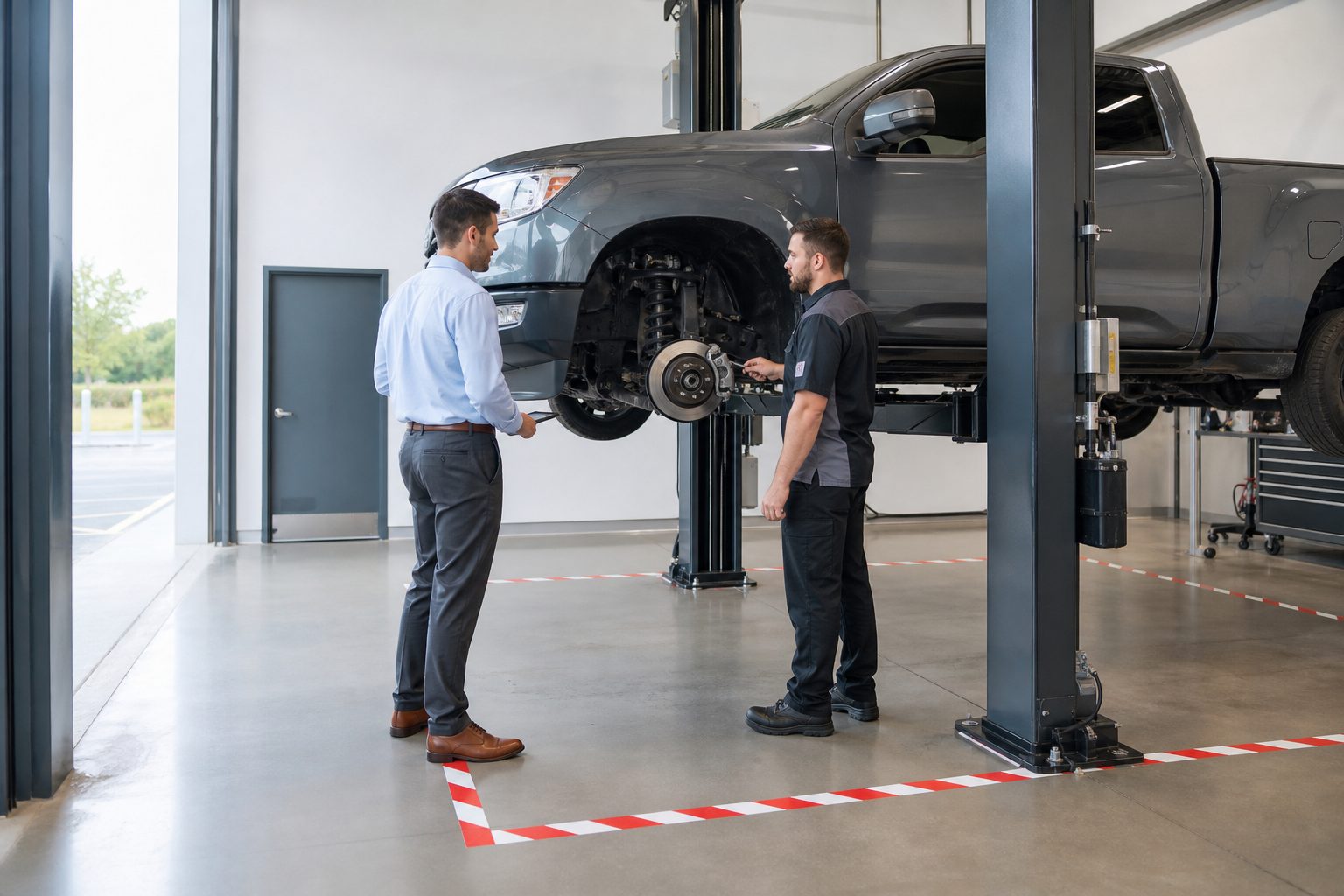
The assigned technician brings the pickup into the bay. The wheels come off, and the tech starts with measurements, not assumptions. Brake pad thickness is checked with a gauge and recorded, usually in millimeters. Rotor surfaces are inspected for grooves and measured for runout. The tech notes the brand and type of the installed pads, since mismatched or cheap parts often lead to customer complaints about noise and pulling.
Tire Assessment and Underlying Issues
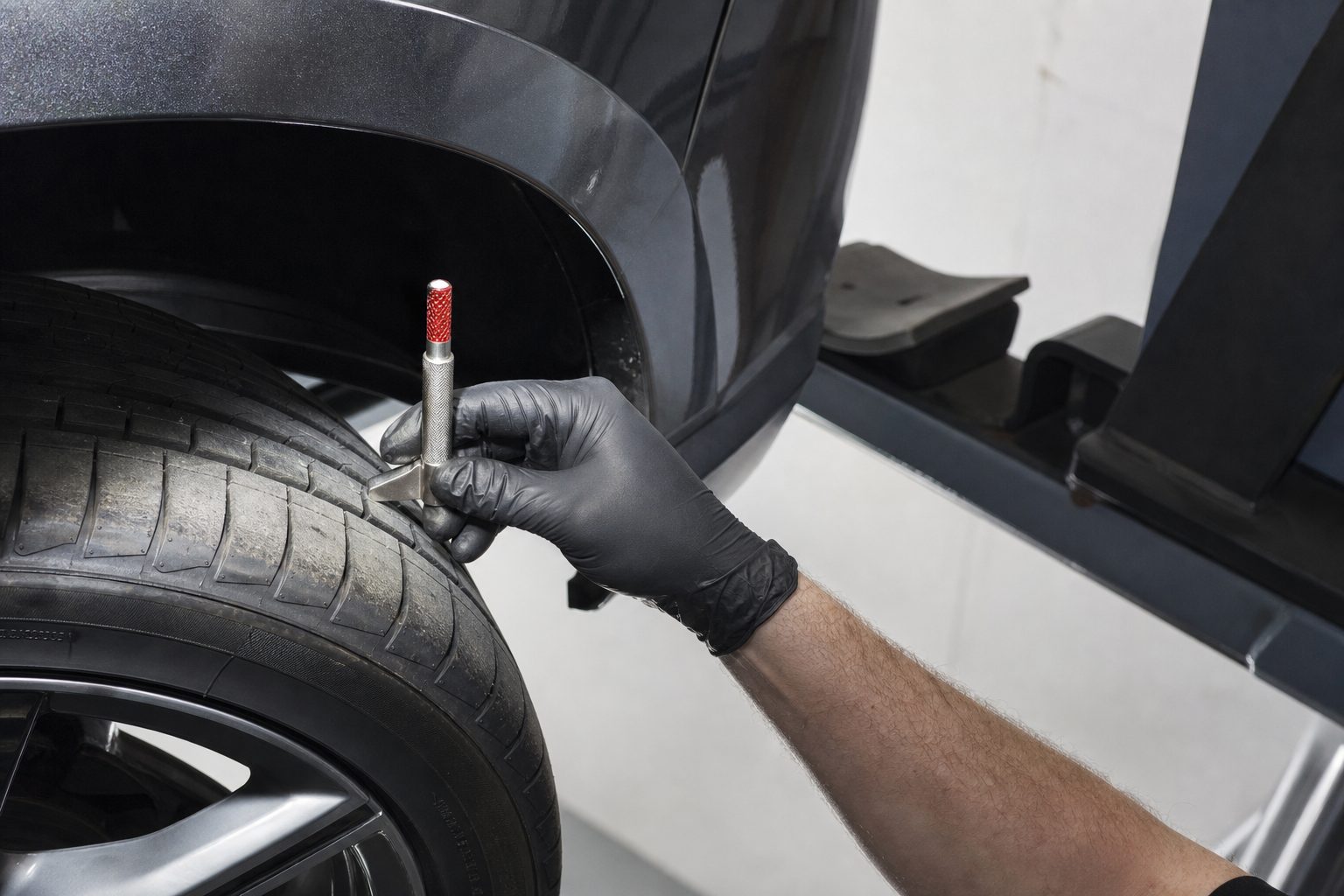
Next, the tires come off the rims for a look inside and out. The left front tire shows an old plug repair and visible cords on the shoulder, likely from running low on air. The tread depth is measured across all four tires, with results written down for the service advisor. The tech checks for bent rims, nail punctures, and signs of alignment or suspension problems, since uneven tire wear often points to deeper issues.
During the inspection, the technician finds a seized caliper pin on the front left and a brake fluid level that is slightly low. All these findings, along with photos of the worn pad and tire, are logged in the shop's inspection tool, ready to share with both the advisor and the customer.
Keep reading: A Multi Point Inspection Checklist You Can Finish in 15 Minutes
Building the Estimate: Labor Times, Parts and Shop Supplies
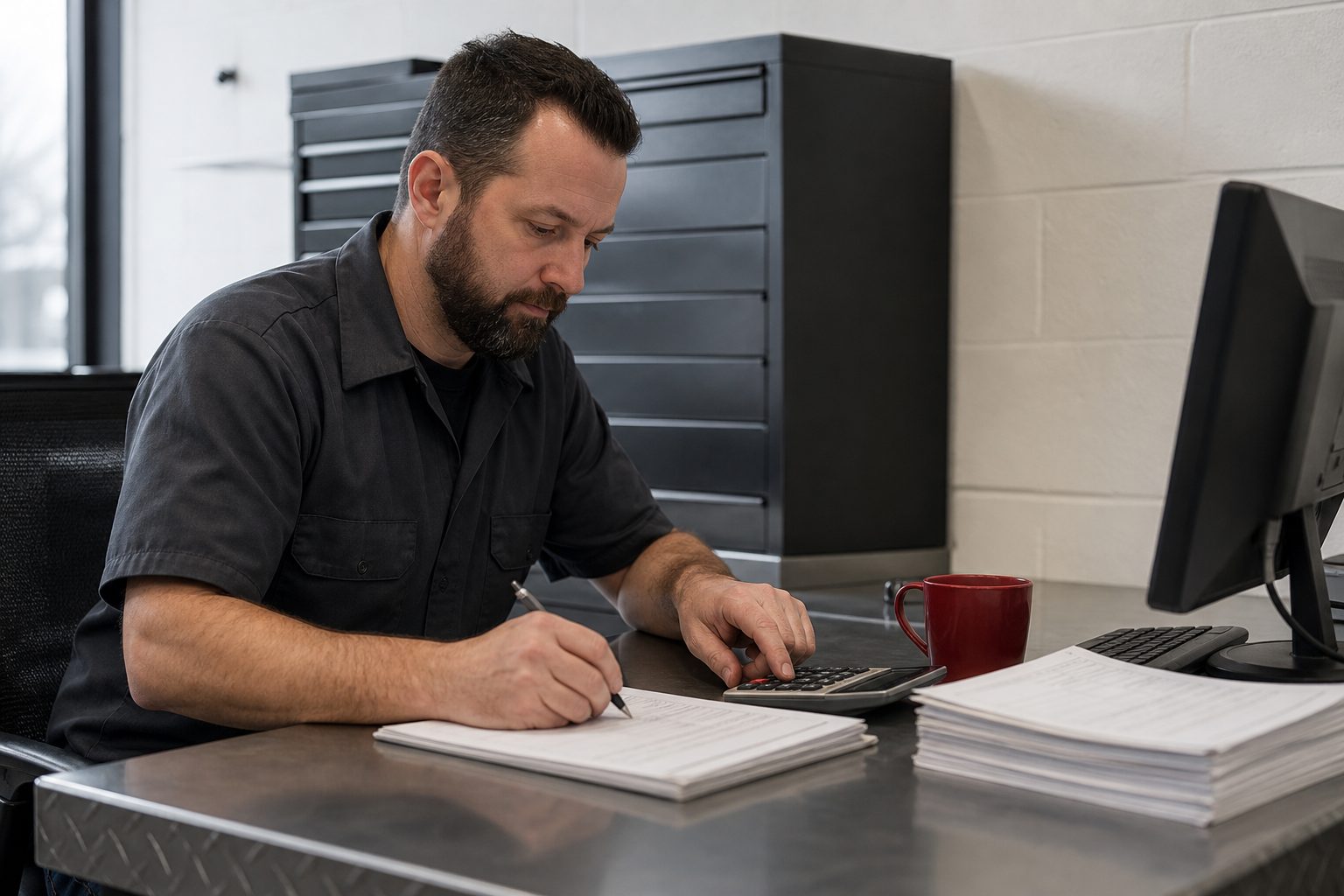
With the inspection data in hand, the advisor starts building the estimate. Labor times come from a standard guide, adjusted for rust or previous aftermarket modifications. In this case, replacing front brake pads and rotors, servicing the caliper pins, and mounting two new tires are itemized. The shop's labor rate is multiplied by the hours required, and shop supplies are added as a percentage or flat fee, depending on policy.
Parts Selection
The parts counter checks inventory. The truck takes a mid-grade ceramic pad set and vented rotors, both in stock. The tire size is common, but only one matching set is on the rack. If the customer prefers another brand, a quote is prepared for both options. Miscellaneous parts, valve stems, brake lubricant, and a small tube of thread locker, are included automatically.
Finally, the advisor prepares two estimates: one for the minimum safe repair (pads, rotors, and tires), and another that includes extras like a brake fluid flush and an alignment. Both estimates list line items clearly, with parts and labor broken out. If digital inspection tools are used, photos and severity notes are attached to each item.
The Approval Conversation and What Gets Written Down
The advisor calls the customer with the findings. They explain the left front tire is unsafe and show a photo of the exposed cords. The brakes are below spec, and the pulling is likely due to the seized caliper pin. The customer is walked through both estimates, with a recommendation to do the full set of repairs. Many shops use text or email to send the inspection report, allowing the customer to see photos and severity grades on their phone before making a decision.
The customer approves the minimum repair: front brake pads and rotors, two new tires, and service to the caliper pins. They decline the alignment and brake fluid flush for now. The advisor notes the customer's choices in the repair order. Documenting both what was approved and what was offered is crucial. It protects the shop if another issue crops up later and sets a clear record for the next visit.
See how InspectBay handles this for automotive repair
Parts Sourcing and the Hour the Truck Sits on a Lift
With approval in hand, the parts order goes in. In this case, all items except the caliper pin kit are in stock. The counter calls the local warehouse for the pins, with an eta of forty-five minutes. This is where many tickets stall: the truck sits on a lift, tying up bay space, while everyone waits for a small but critical part.
Managing Downtime
Some shops move vehicles off the lift if the wait is long, but with the wheels and brakes off, moving this truck would take extra time. The technician preps the new rotors and pads, mounts one tire, and cleans up the caliper. The shop's workflow board is updated so everyone knows the job is in a holding pattern. Advisor, tech, and dispatcher all watch the clock, since every hour the lift is occupied means one less vehicle can be processed that day.
When the caliper pin kit arrives, the technician gets a notification and the job moves forward. Good communication and clear records are what keep the shop from losing track of half-completed work when the day gets busy.
Install, Torque Spec and the Road Test That Closes the Job
The technician installs the new brake rotors and pads, using the correct torque specs for all fasteners. The caliper pins are replaced and greased, and the caliper moves freely. The new tires are mounted and balanced, valve stems replaced, and the wheels are put back on the truck.
Double-Check and Documentation
Before the wheels are torqued down, the tech double-checks pad fitment, rotor orientation, and brake hardware. Each lug nut is torqued in a star pattern, and the values are recorded on the inspection sheet. Some shops use torque sticks, others use digital torque wrenches, but the key is to record every step.
The technician lowers the truck, pumps the brake pedal to set the pads, and then takes the vehicle for a road test. They check for noise, pedal feel, and braking pull. The low tire warning is reset, and the vehicle tracks straight. The road test confirms the original concerns are fixed, and the repair order is updated with the results. Any remaining recommendations are noted for the advisor's final review.
Pickup, Invoice and the Note That Sets Up the Next Visit
The service advisor calls the customer and lets them know the truck is ready. When the customer arrives, the advisor goes over the invoice, showing photos of the old parts and the tire with exposed cords. The invoice lists labor, parts, and supplies separately, with notes about the declined alignment and brake fluid flush.
The advisor also makes a note in the shop's system: "Recommend alignment and brake fluid flush at next visit. Customer declined today." This note will pop up at the next check-in, ensuring the conversation continues and nothing is forgotten. Good records make future service easier, and they show customers the shop is paying attention.
By the time the truck leaves the lot, every step is documented. From intake to pickup, clear communication and detailed records are what keep jobs moving and customers returning.
Shops that use digital vehicle inspection tools, with technician photos, severity grading, and one-link customer approval, can streamline this process. These systems keep everyone on the same page from drop off to pickup, and help ensure nothing gets missed along the way.